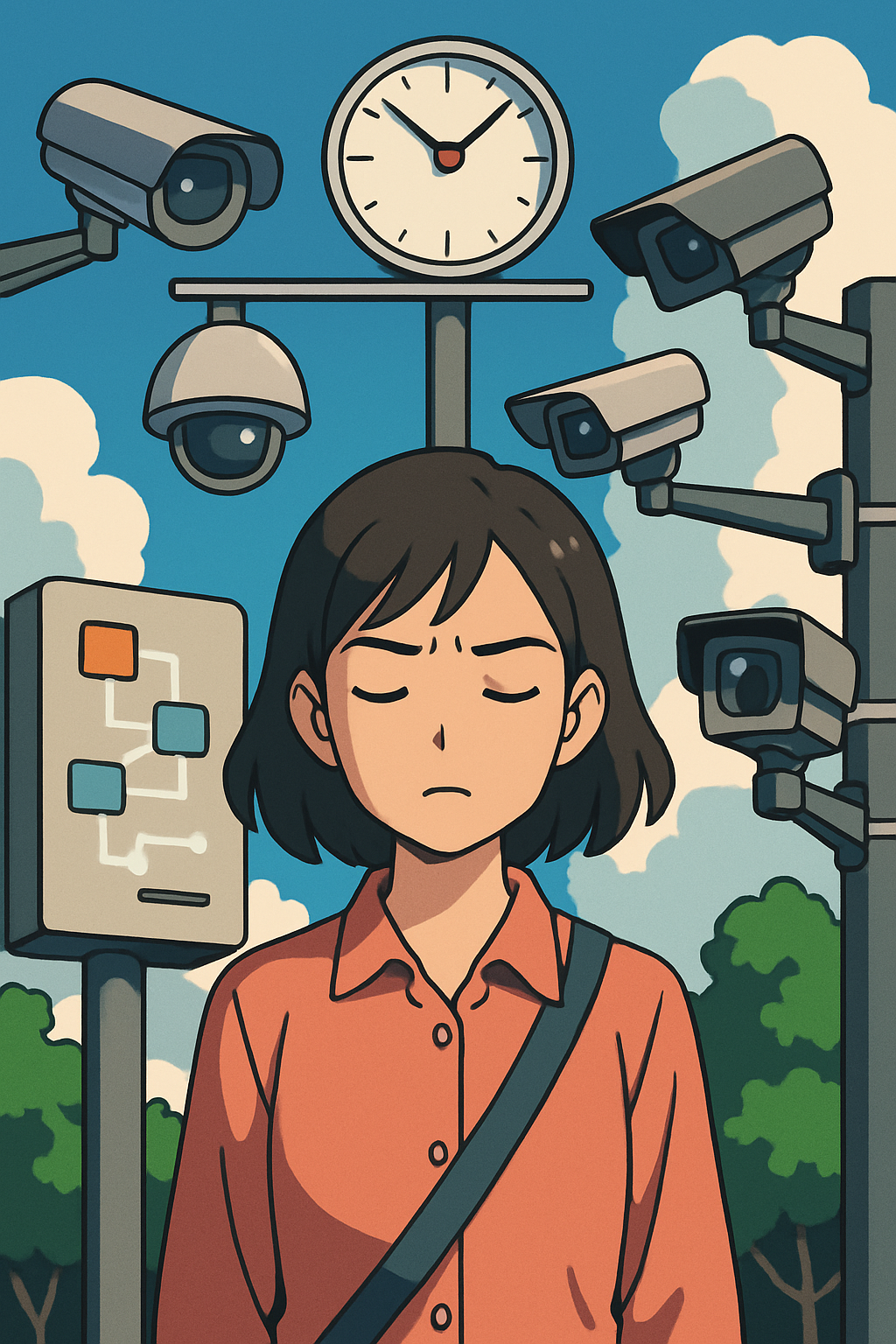
The Price of Being Seen
460 words
When the old railway station reopened, its new cameras were presented as a modest improvement. They watched the entrances, the ticket machines and the dark passage beneath the platforms. After a series of thefts, commuters welcomed them. A month later, an online notice announced that the system had helped identify a suspect. The cameras seemed to offer a simple bargain: a little less privacy in exchange for greater safety.
But the station’s cameras were only one part of a much wider network. Passengers tapped travel cards, paid with phones and connected to public Wi-Fi. Each action left a record: where someone had travelled, when they had arrived and, in some cases, which shops they had visited. These details were stored by different organisations, each with its own rules. No single observer knew everything, yet together the records could form a surprisingly intimate portrait of a person’s daily life.
This was brought home to Mara, a local journalist, when she investigated a delay to a proposed housing project. A council report claimed that few residents used the nearby bus route, so the service could be cut. Mara compared the report with anonymous travel data and found that the route was busy at precisely the hours when many shift workers relied on it. The data had not been gathered to harm anyone; it had been collected to manage transport. Still, its interpretation could shape decisions that affected thousands of lives.
The problem, Mara realised, was not simply that cameras existed. It was that people often had little idea what was being recorded, how long it would be kept or who could use it later. Surveillance might prevent violence or help emergency workers find someone in danger. It could also discourage people from attending a demonstration, speaking freely or seeking support for a sensitive problem. The same system could protect one person while making another feel exposed.
At a public meeting, residents did not demand that every camera be removed. They asked for clear limits: signs explaining what was recorded, strict rules for sharing data, independent audits and a way to challenge mistakes. Those demands changed the discussion. Safety was no longer treated as a reason to collect everything, and privacy was no longer dismissed as a luxury. The community began to see both as responsibilities that had to be protected together.
A surveillance society is not created by technology alone. It takes shape through choices made by officials, companies and ordinary people who accept convenience without asking what follows. Cameras may help make public spaces safer, but trust depends on restraint and accountability. The most important question is not whether society can watch more closely. It is whether it can decide, openly and fairly, when watching is justified—and when it should stop.