The Stories a Society Tells Itself
417 words
When the town library announced that it would close for repairs, Mara expected the usual complaints about inconvenience. Instead, people began arriving with stories. An elderly mechanic brought a children’s book he had read aloud to his daughter during a long hospital stay. A teenager carried a novel that had helped him feel less alone after moving to the town. One by one, they placed their books on a table, each with a note explaining why it mattered. The collection revealed something the library’s shelves had never quite made visible: a community is held together not only by shared streets, but by remembered words.
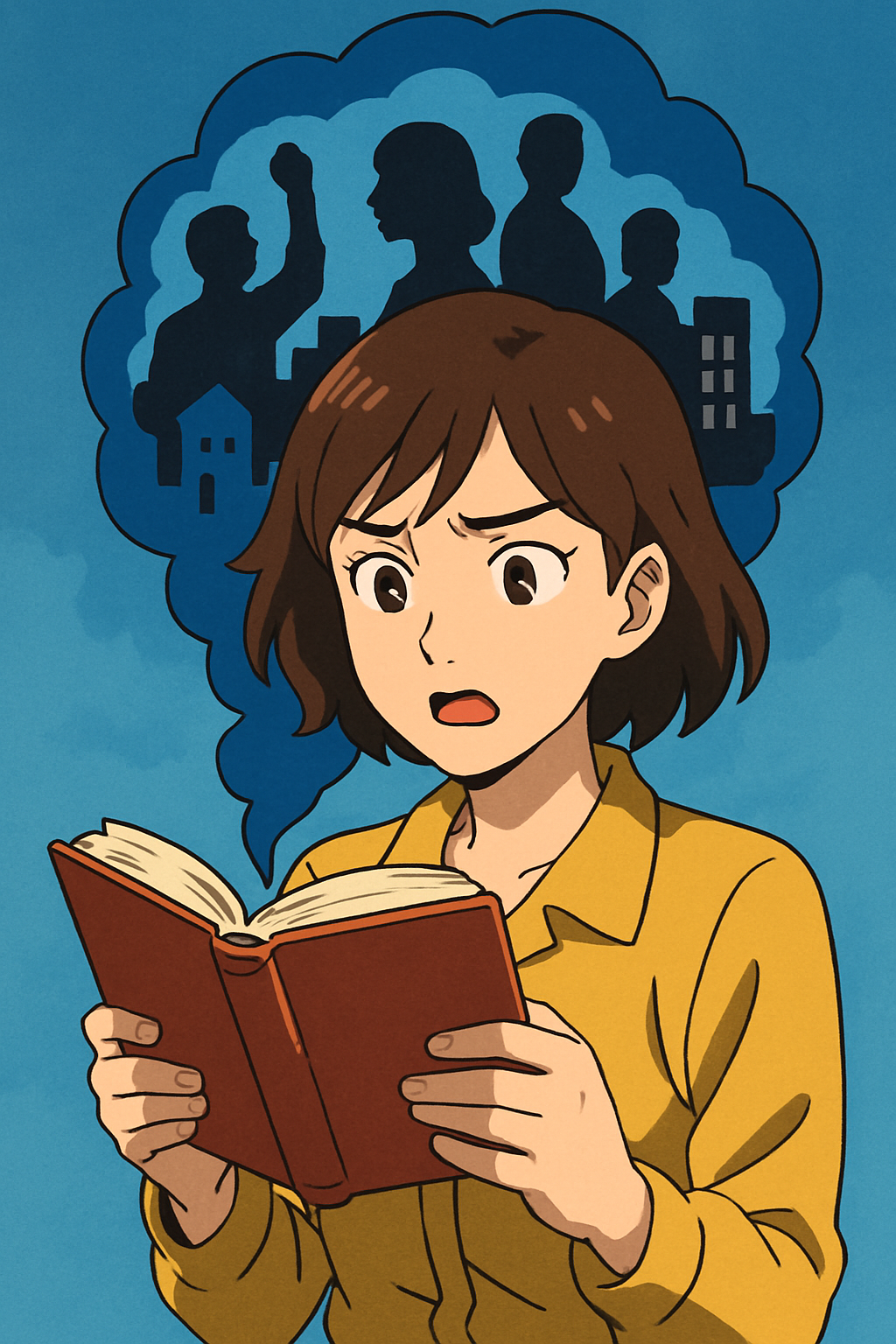
Stories matter because they let us enter experiences beyond our own. A novel can make a distant historical event feel immediate; a folktale can preserve values that official records overlook. Through characters, readers encounter difficult choices without having to face their consequences directly. They may recognise their own fears in someone very different from themselves, or discover that a familiar belief looks less certain from another point of view. This imaginative exchange does not automatically make people kinder or wiser, but it creates room for reflection. It can complicate easy judgements and encourage attention to lives that are usually ignored.
Literature also reflects the society that produces it, though never like a perfectly clear mirror. Writers select details, shape voices, and decide whose experiences deserve the centre of the page. A fashionable story may reveal what a culture admires, while a work that challenges its era can expose what that culture would rather conceal. Later generations often read old books differently, noticing assumptions about class, gender, race, or authority that earlier readers accepted without question. The meaning of a story therefore changes as its audience changes. Literature records not just what people believed, but also the arguments that beliefs provoked.
During the library’s temporary closure, Mara helped arrange a reading in the town hall. People read from their chosen books, then spoke about the moments that had stayed with them. The mechanic’s story was about patience; the teenager’s was about finding a place to belong. Their interpretations did not match exactly, and that difference became part of the evening’s value. By the time the library reopened, the donated notes had been bound into a small volume. It was not a complete portrait of the town, but it showed how stories could connect private memories to public life—and how a society might begin to understand itself by listening to the many voices within it.