Who Pays for Culture?
341 words
On a grey Saturday morning, Maya followed a trail of painted arrows through her neighbourhood. They led to a row of old warehouses beside the canal, where local artists had turned one building into a small museum. Inside, visitors could see photographs of the area before the warehouses closed, along with stories collected from people who had lived and worked there. The museum was free to enter, thanks to a grant from the city council.
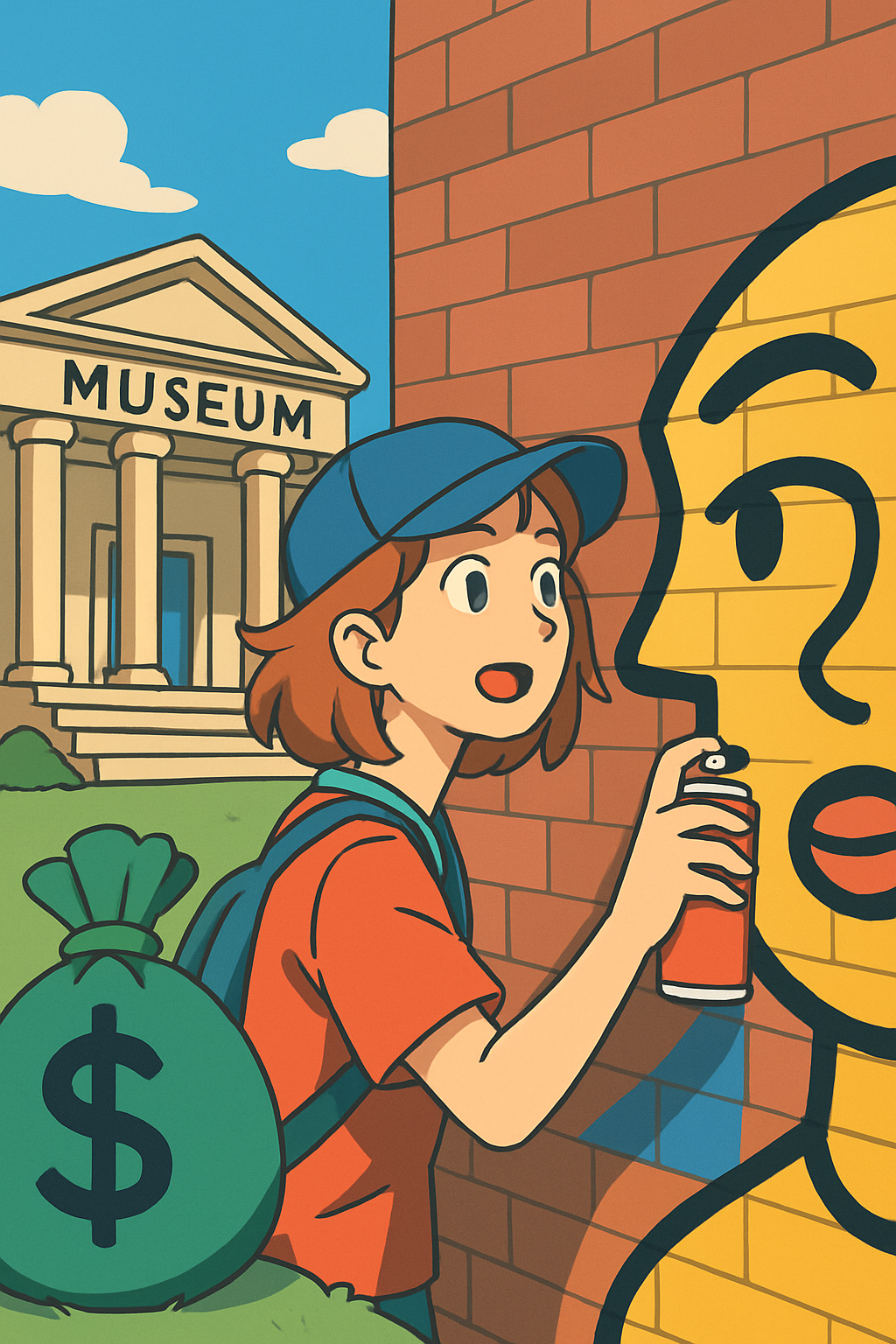
Outside, a large mural covered the wall of a nearby building. Its bright shapes showed the canal as it might look in fifty years, with cleaner water and trees along the banks. Some residents loved the painting, while others felt that public money should be spent on practical needs instead. The debate had started when the council announced that it would use part of its arts budget to support street art and community exhibitions.
Maya was helping the museum prepare a weekend event, so she heard both sides. A shop owner said the mural brought visitors to the area, and several people had discovered the museum while looking at it. A parent argued that children needed safe parks more than colourful walls. The museum’s director replied that culture was not a luxury: it helped people understand their shared history and imagine changes to come. She also explained that the grant paid local artists and helped keep the building open.
At the event, Maya watched an older visitor point out a photograph of the canal in the 1970s. He told a group of children how workers had gathered there after their shifts. The children then added their own drawings to a large paper map, showing places they hoped the neighbourhood would protect. Maya realised that the museum and mural were not separate from everyday life. They gave people a place to meet, remember and discuss what mattered. Public funding could not solve every problem, but when residents had a voice in how it was used, culture became part of the neighbourhood rather than something distant from it.