The Weather of Certainty
537 words
At 7:12 on a Tuesday morning, a photograph of a flooded railway station appeared on thousands of phones. The image was dramatic: commuters stood waist-deep in brown water while a train’s headlights shone through the rain. Within minutes, the caption had turned the scene into an accusation. Officials, it claimed, had concealed a storm warning to protect the reputation of a new transport project. By breakfast, the photograph had become evidence in an argument about competence, corruption and the country’s future.
There was only one problem. The picture had been taken six years earlier, in another city, during a storm that had been thoroughly reported. A local journalist identified it by tracing the image to an archived news article. The correction was accurate, but it travelled less quickly than the original claim. Some people welcomed the clarification; others dismissed it as a convenient excuse. A few conceded that the image was old while insisting that it illustrated a broader truth about neglected infrastructure. The photograph had lost its value as proof, yet retained its power as a symbol.
This small episode captures a difficulty of public life in the information age. Facts have not vanished, and evidence has not become useless. Rather, the conditions under which people encounter them have changed. News arrives beside jokes, advertisements, personal testimony and deliberate fabrications, often without clear signals of authority. A person may sincerely believe that a claim is well supported because it has been repeated by friends, presented confidently, or woven into a story that fits earlier suspicions. Repetition can feel like verification; emotional force can be mistaken for reliability.
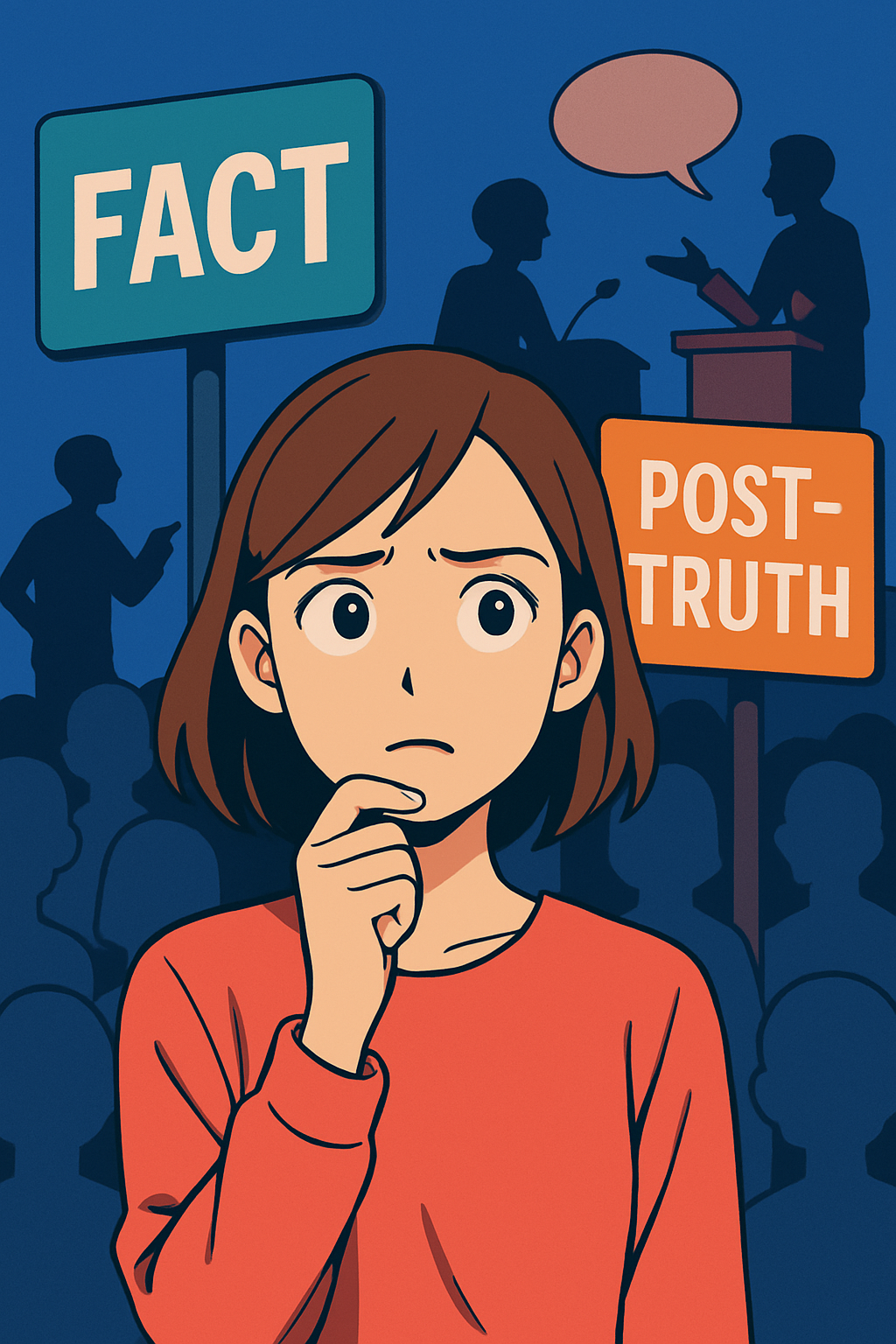
The phrase “post-truth” is therefore less a declaration that truth no longer matters than a warning about how easily its public status can be weakened. Debate becomes especially fragile when participants treat disagreement as proof of bad faith, or regard every correction as an attack. Yet scepticism need not lead to cynicism. The first asks what would count as convincing evidence and remains willing to revise a view; the second assumes that all evidence is merely a tool of power, and so makes revision pointless. Between credulity and cynicism lies the demanding practice of proportionate judgement.
That practice depends on more than individual intelligence. It requires institutions that explain how they know what they claim to know, journalists who distinguish reporting from inference, and platforms that do not reward outrage without regard for accuracy. It also requires citizens willing to pause before sharing, to separate a plausible interpretation from a verified fact, and to acknowledge uncertainty without treating it as weakness. None of these habits guarantees agreement. They do, however, make disagreement more honest.
By noon, the railway photograph had disappeared from the headlines, though its afterlife continued in arguments and private messages. The correction could not restore every reader’s trust, nor could it settle whether the transport project was well managed. It could do something more modest and more important: show that a claim had been tested, that evidence had altered the account, and that public judgement remained possible. In a noisy climate, truth is not a possession secured once and for all. It is a shared achievement, maintained by methods that allow belief to answer to reality.