A Table of Difficult Choices
490 words
When Mara inherited her grandmother’s kitchen, she found more than chipped bowls and a temperamental stove. In a drawer lay a recipe book stained with oil, its pages crowded with instructions for slow-roasted lamb, river fish, and vegetable stews. Beside several recipes, her grandmother had pencilled notes: “Use what is available”; “Waste nothing”; and, beside a particularly elaborate meat pie, “For a celebration.” The book seemed to offer a practical ethic, though not a consistent one. Its author had kept chickens, bought meat from a local butcher, and treated every meal as an occasion for gratitude. Mara, who had stopped eating meat at university, wondered whether gratitude could make an unequal relationship with animals acceptable—or whether the question itself had changed since her grandmother’s time.
Mara’s doubts became sharper when she visited a food exhibition at a science museum. In a glass case, a small sample of cultivated meat—grown from animal cells rather than taken from a slaughtered animal—sat beside diagrams of the process. The technology promised a possible reduction in animal suffering and, depending on how it was produced, a lighter environmental footprint. Yet the promise came with qualifications. Cultivated food requires energy, investment, and carefully controlled facilities; its benefits cannot be assumed merely because the product sounds futuristic. Nor would it settle every dispute. Some people object to industrialising food further, while others ask whether a substance made in a laboratory can belong to a culture built around land, seasons, and shared practice.
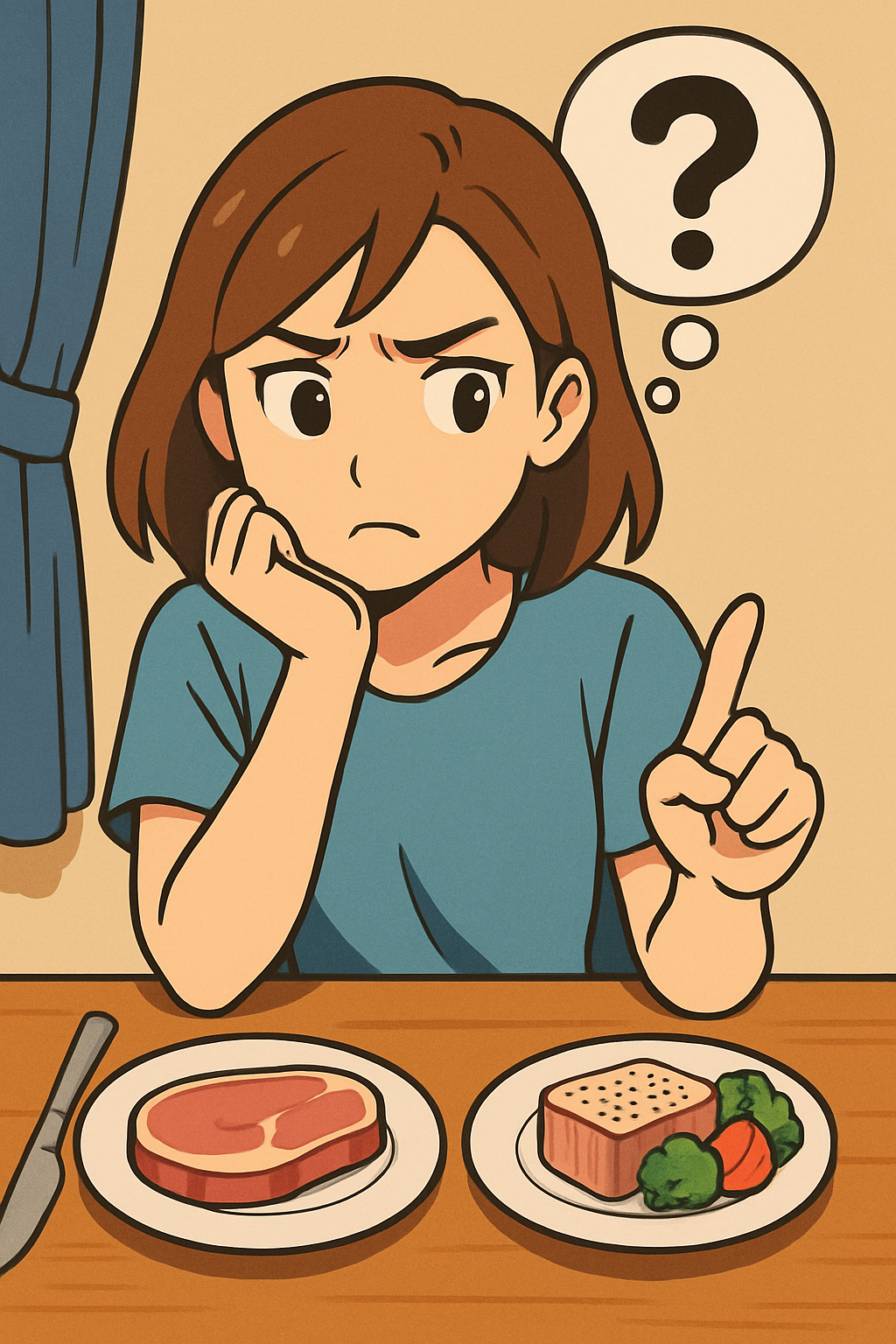
At dinner that week, Mara’s brother Tom brought up the exhibition. He had begun buying meat from a nearby farm that claimed to prioritise animal welfare. “I’d rather support a farmer I can speak to than pretend my choices have no consequences,” he said. Mara recognised the force of the point. Abstention was not a magic escape from agriculture’s effects: crops also occupied land, required water, and could displace habitats. Still, buying meat from a conscientious source did not erase the fact that an animal had died. Their disagreement was not between someone who cared and someone who did not. It was between different attempts to weigh suffering, livelihood, ecology, affordability, and the meanings attached to food.
They cooked from the old book together, adapting its lamb pie into a version with mushrooms, lentils, and walnuts. Tom contributed a little meat from the farm, served separately. The meal was not a verdict, and Mara did not pretend it resolved the larger argument. Instead, the family spoke about who had grown the ingredients, what had been discarded, and which habits they might change. Mara began to see that ethical eating was less like choosing a spotless menu than accepting responsibility within an imperfect system. That responsibility could mean eating less meat, asking better questions of producers, welcoming well-tested alternatives, or refusing to treat convenience as the only value. Around the table, uncertainty remained—but it had become a reason for attention rather than an excuse for indifference.