The Attention Economy: What Our Focus Is Worth
533 words
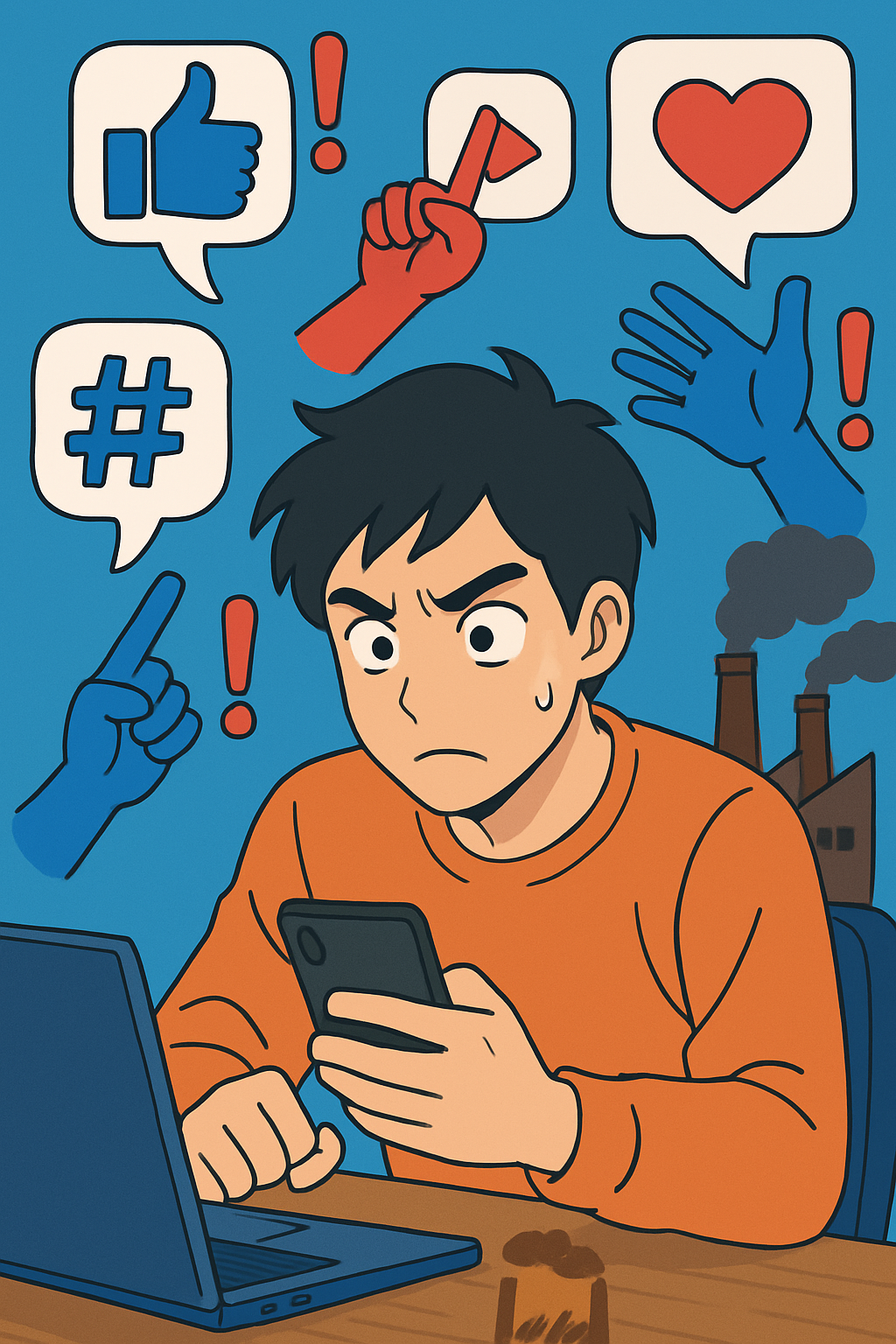
At 7:12 on a Tuesday morning, Mara opens her phone to check the weather. A message appears, then a headline, then a video recommended because she watched something similar last week. By the time she puts the phone down, the kettle has boiled and the weather remains unknown. Nothing has been stolen in the ordinary sense: no wallet, no hourglass, no ticket to a missed train. Yet a portion of her morning has been redirected, one small interruption at a time. This is the attention economy at work, turning human focus into a resource that platforms can attract, measure and sell.
Many online services are free at the point of use, but their business models depend on keeping people present. The longer a user stays, the more advertisements can be shown and the more behaviour can be recorded. Recommendation systems therefore learn what may prompt another click, pause or return visit. They need not understand a person’s deepest motives; a reliable prediction of the next action is commercially useful enough. Alerts, infinite scroll and automatically playing videos reduce the natural pauses in which someone might otherwise decide to leave. These features are not all harmful, and they can make services convenient. Their significance lies in how consistently they favour continued engagement.
The competition for attention also changes what circulates in public. Material that provokes anger, delight or alarm often travels farther than information that is careful but emotionally restrained. Platforms do not invent these reactions, but their ranking systems can amplify content that elicits them. The result is not simply that people spend too much time online. It is that journalists, campaigners, businesses and ordinary users may shape what they say around the demand for visibility. Nuance can be compressed into a slogan; uncertainty can be presented as weakness; a complex dispute can become a contest between enemies. In such conditions, attention is abundant in appearance but scarce where patient understanding is required.
The social cost is difficult to calculate because it accumulates quietly. A distracted conversation may seem trivial, as may a student’s interrupted reading or a worker’s repeated glance at a notification. Across millions of people, however, these diversions can weaken habits of concentration and make shared attention harder to sustain. They also raise questions about power: a handful of companies can influence which subjects are prominent without issuing direct orders or making their choices fully visible. The issue is not that technology has made people helpless. It is that individual choices are made within environments deliberately designed to shape them.
A healthier relationship with digital media requires more than personal discipline, though practical boundaries can help. It also depends on design choices, transparent rules and public debate about the incentives behind online services. A platform could make stopping as easy as continuing, explain why a recommendation appears, or measure success by usefulness rather than minutes spent. None of these changes would abolish persuasion or distraction. They would, however, recognise that attention is not merely a commodity: it is the means by which people learn, care for one another and participate in civic life. What a society chooses to reward with visibility will help determine what it is able to notice.