The Forecast That Changed Nothing—and Everything
557 words
At 6:12 on a Thursday morning, Mara received a forecast that was both precise and unhelpful. A flood model put the chance of the river overtopping its banks before midnight at 38 per cent. The number had been calculated from rainfall estimates, soil measurements and records of past storms. It was not a guess, exactly; nor was it a promise. Mara, the town’s emergency coordinator, had to decide whether to close the riverside road and move the residents of a care home to higher ground.
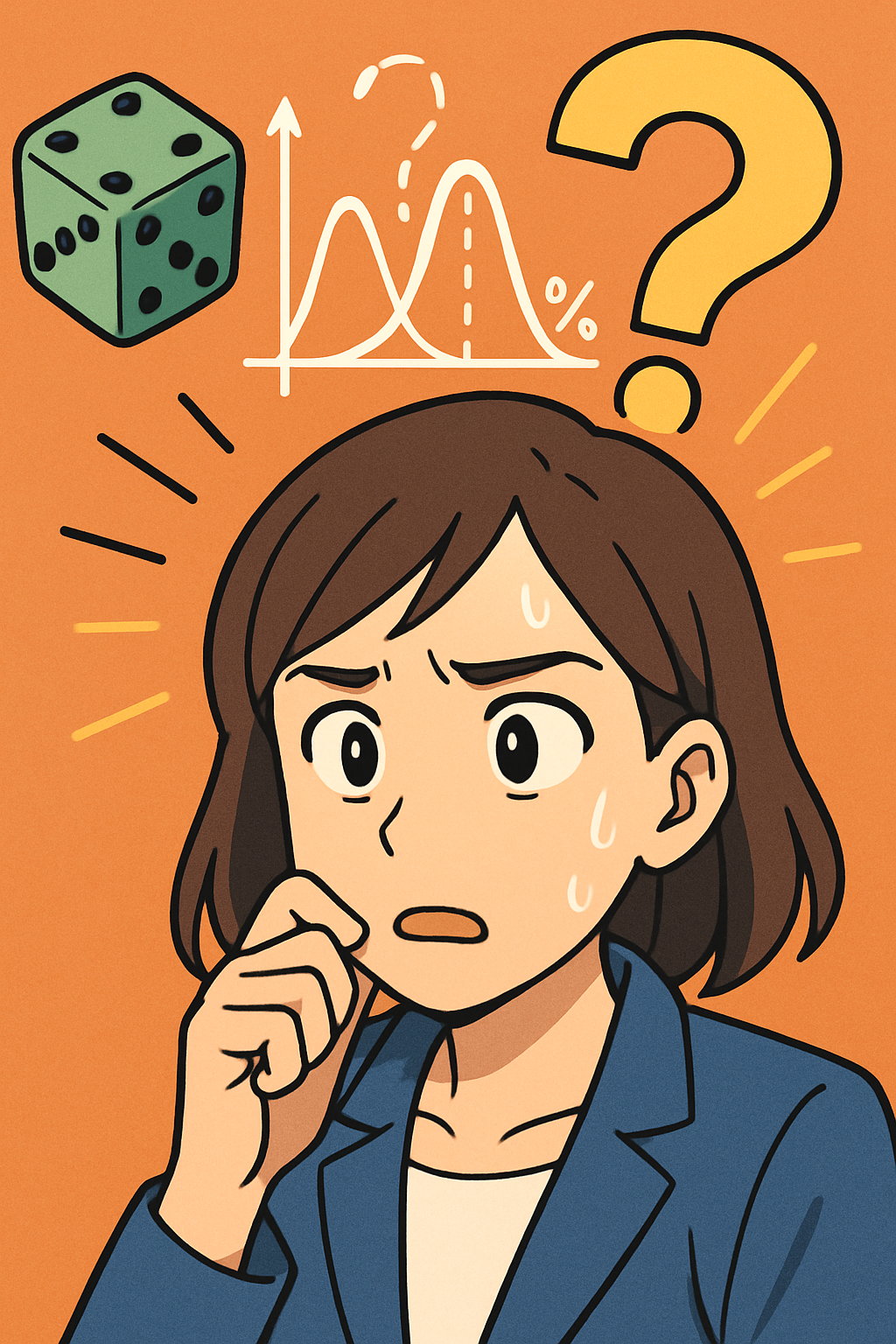
A colleague argued that a 38 per cent risk was too low to justify the disruption. The care home’s director worried that moving frail residents could itself cause harm. Yet waiting for certainty would mean waiting until the river had already begun to rise. Mara asked the forecasting team what the figure actually meant. It described the frequency with which events like this one would occur across many comparable situations, not a guarantee about what would happen on this particular night. That distinction offered no comfort, but it made the uncertainty more honest.
The team also showed her the range of plausible outcomes. Under one set of assumptions, the river would remain below the road; under another, it could flood the care home’s access route by early evening. The model’s estimate was sensitive to how quickly the rain would move across the hills, a factor the weather radar could not yet settle. Mara realised that the question was not simply whether the forecast was right. It was whether the consequences of being wrong in either direction were acceptable. A needless evacuation would be distressing and costly. A delayed one might leave people trapped.
She chose a limited response: the road would close at noon, buses would be placed nearby, and the care home would begin preparing residents and medication for a possible move. The decision was reversible, unlike the river’s course. Staff could postpone the transfer if the rain weakened, but they could not recover the hours lost by doing nothing. Mara also arranged for the forecast to be updated every hour, with a clear threshold for calling the buses in. In this way, uncertainty became something to manage rather than a reason to postpone action.
By mid-afternoon, the rain had shifted east. The river rose, but it stayed within its banks, and no residents had to leave. Some people called the precautions excessive. Mara did not claim that the evacuation plan had been proved necessary; the event could not reveal what would have happened under different choices. She did, however, note that the road closure had prevented drivers from entering a stretch where water later pooled. The forecast had not delivered certainty, but it had helped the town preserve options.
The episode changed how Mara’s office discussed risk. Instead of treating a percentage as a verdict, staff asked what evidence supported it, how uncertain the estimate was, and which actions could be taken gradually. They distinguished probability from consequence: a modest chance of severe harm could deserve more attention than a high chance of minor inconvenience. Above all, they learned that a decision can be reasonable even when its outcome is lucky, and unreasonable even when it happens to turn out well. Science could not choose for them. It could make the choices clearer—and expose the assumptions on which they rested.