The Unequal Weight of Tomorrow
560 words
When the flood reached the old railway station, Mara stood on its platform and watched the river erase the painted line that marked the town’s boundary. The water had not arrived without warning. For years, scientists had traced the rising risk to warmer seas and heavier rainfall; for years, officials had debated who should pay for stronger defences. Now the station clock had stopped, and the argument had become a question of where families could sleep.
Mara worked for a small coastal council, one of many with limited funds and little influence over the decisions that had helped shape the climate. Her town had contributed almost nothing to the accumulated emissions warming the planet. Yet its residents were losing homes, orchards and, in some cases, ancestral burial grounds. At an emergency meeting, a visiting minister praised the town’s resilience. Mara listened politely. Resilience, she thought, was often the name given to endurance when assistance was late or inadequate.
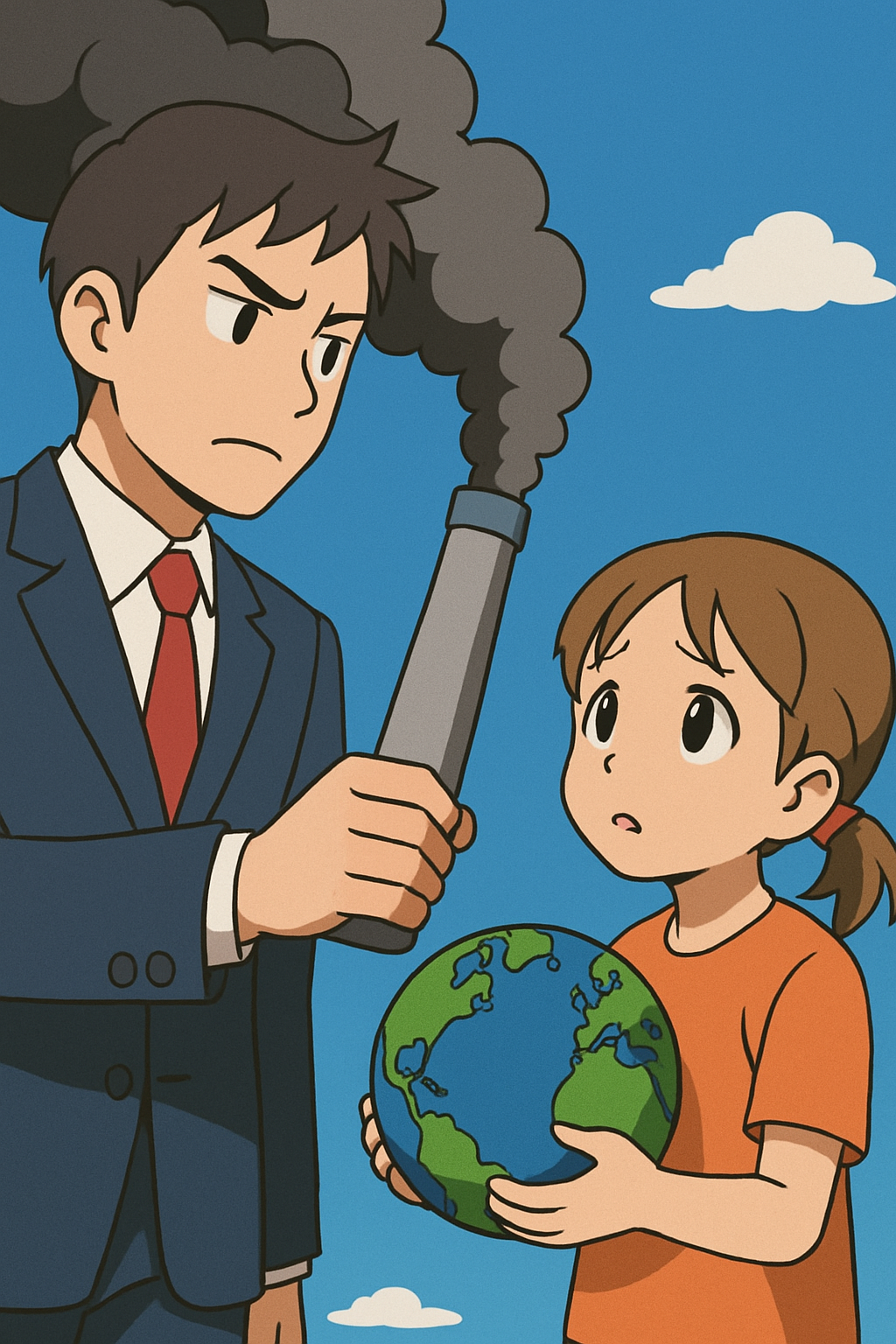
The minister’s country had grown wealthy through coal, oil and industry, and its past emissions still lingered in the atmosphere. Its representatives argued that present-day budgets were tight and that every nation must now share the cost of reducing pollution. The claim was not entirely false: the climate could not be stabilised by a few governments acting alone. But equal demands did not create equal burdens. A village with few resources could not be expected to build sea walls at the same pace as a nation whose prosperity had been financed by decades of intensive energy use.
This was the moral tension Mara tried to explain in her reports. Responsibility, she wrote, had more than one measure. It could reflect how much a country had contributed to the problem, how much it could afford to respond, and how urgently its people faced harm. These measures did not always point to the same answer. A rapidly growing economy might have modest historical emissions but considerable capacity today; a poorer state might have contributed little and still lack the means to protect its population. Fairness required attention to both history and circumstance, rather than a single formula that disguised the differences.
At home, the same question crossed the boundary of time. The town’s flood barrier would take years to plan and decades to repay. Should residents accept higher taxes now for a danger their children might face more often? Or would restraint merely hand the next generation a weaker shore and a larger bill? Mara knew that future people could not vote in the council chamber, but their absence did not make their interests imaginary. A decision delayed was still a decision: it transferred risks, costs and fewer choices to those who had no part in making it.
By spring, the council had secured support for a raised evacuation route and a wetland restoration project, though the larger barrier remained uncertain. Mara did not call the outcome justice. It was a beginning, shaped by negotiation and still far short of what the town needed. Yet the new route joined two ideas that public debate often separated: those who had benefited most from carbon-intensive development owed more to those facing its consequences, and those alive now owed care to people not yet born. The river continued to rise and fall. The task was to make responsibility travel further than the water—across borders, and across generations.