The Line That Moves: Censorship and Free Expression
495 words
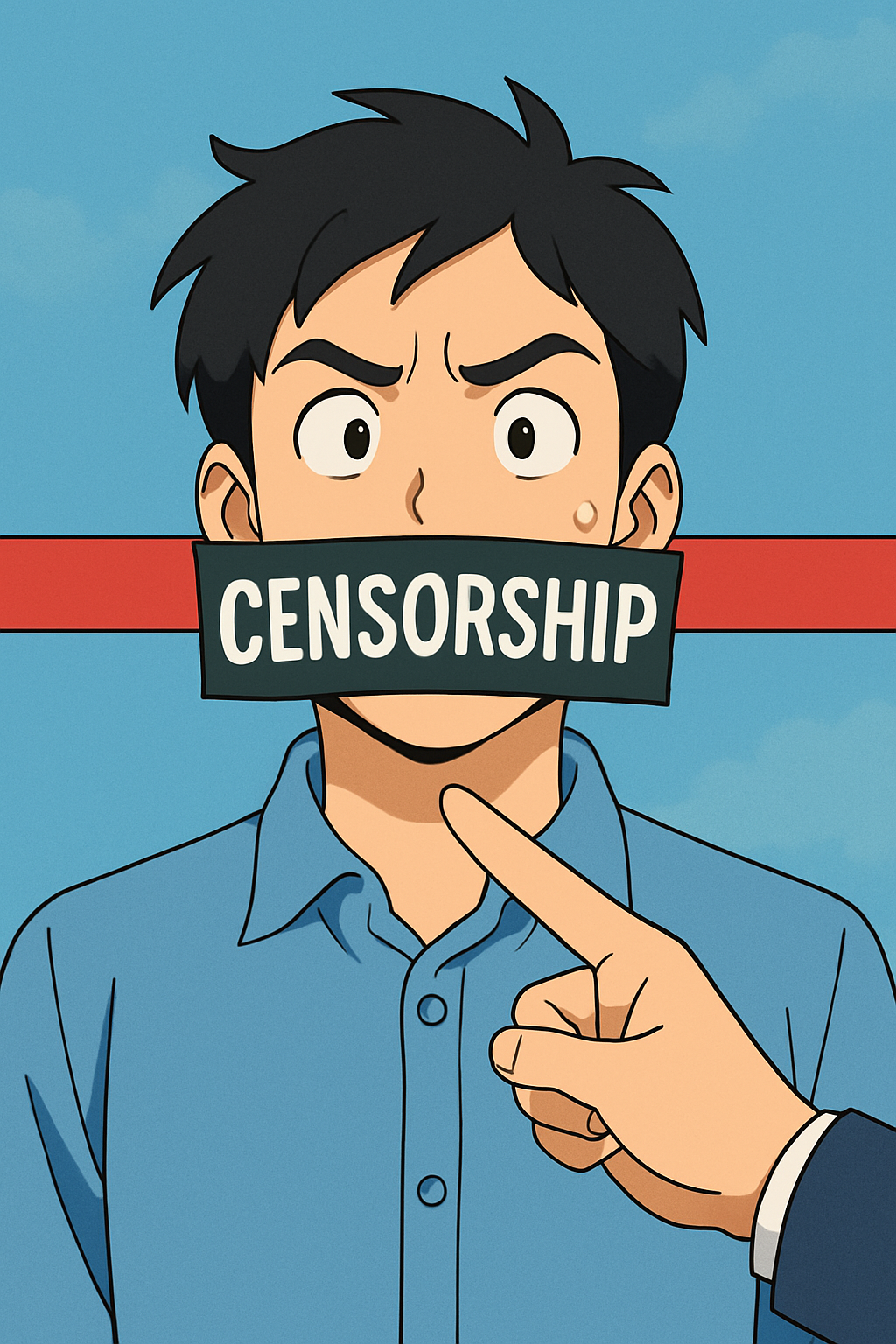
When the town council announced that it would remove a controversial mural from the station wall, the dispute seemed at first to concern only paint and property. The mural showed a row of citizens whose mouths were covered by strips of black cloth; beneath them, in small lettering, ran a sentence from an old local protest song. Some residents called it an accusation against the town. Others saw it as a warning about what happens when public discomfort is mistaken for public harm. Within days, the station had become a place where people stopped to argue, photograph the wall, and listen to strangers explain what they thought the image meant.
The council’s decision rested on a familiar claim: public institutions should not display material that divides the community. Yet division, as the mural’s defenders observed, is not always evidence of damage. A work of art may expose a disagreement that already exists, making it visible rather than creating it. Still, unrestricted expression does not settle every question. A person who threatens a neighbour, reveals confidential information, or deliberately incites violence is not merely expressing an unpopular opinion. Words can intimidate, defame, or put others at immediate risk, and societies have reason to limit some forms of speech for those purposes.
The difficult task is distinguishing such harms from the unease that accompanies criticism. Authorities may be tempted to describe embarrassment as danger, especially when a message challenges their own legitimacy. A rule against disruption can quietly become a rule against dissent; a prohibition intended to protect a vulnerable group can be applied selectively, shielding one side while silencing another. For that reason, restrictions need clear definitions, consistent enforcement, and a process through which decisions can be challenged. Their justification should be examined, not accepted merely because it is expressed in the language of safety or civility.
At the station meeting, a retired teacher spoke in favour of removing the mural. She said her grandson had asked whether the black cloth meant that the town was ashamed of him. A young artist replied that the image had made her ask her own family why they had stopped singing the protest song. Neither dismissed the other’s concern. The council eventually kept the mural but added a plaque explaining its historical context, while inviting residents to propose further public works. The compromise did not end disagreement; it gave disagreement a place to continue without pretending that silence had resolved it.
The episode offered no universal formula for where freedom should stop. That boundary shifts with changing ideas about privacy, equality, authority, and harm. But the way a society draws it reveals more than its tolerance for offensive language. It shows whether people trust one another to answer speech with speech, and whether institutions can distinguish a genuine threat from a challenge to their comfort. Free expression is not the absence of limits; it is the ongoing argument over which limits can be defended without making honest argument impossible.